



Table of Contents
The Ancestral Divine Gift: “Wachuma or San Pedro”
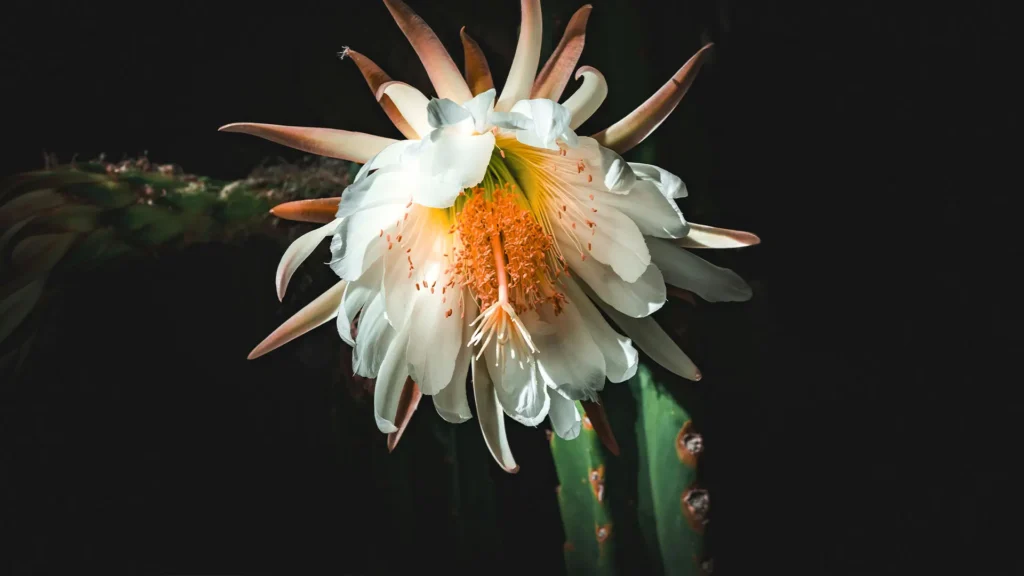
Wachuma, also known as San Pedro, is one of the most emblematic cacti of the Andes and a constant presence in the cultural history of these mountains. Native to high-altitude regions ranging from 1,000 to 3,000 meters, this plant grows in Peru, Ecuador, Bolivia, Chile, and Argentina, often reaching heights of more than seven meters. Its two most recognized species Echinopsis pachanoi and Echinopsis peruviana, share an impressive resilience to Andean climates, although they differ in the shape and color of their spines: longer and darker in the peruviana, shorter and lighter in the pachanoi. Both display a ribbed structure ranging from five to fourteen ribs, a botanical trait that has inspired symbolic myths, though without scientific basis.
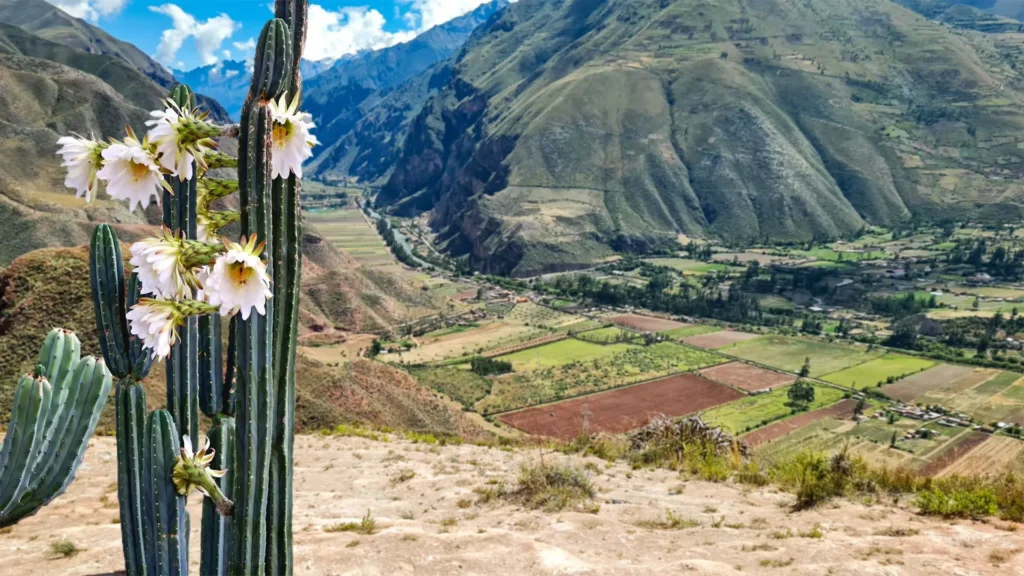
This plant has accompanied Andean peoples for millennia. Archaeological evidence dating back more than 6,000 years, along with depictions in Chavín art, show Wachuma as a sacred element connected to healing and spiritual knowledge. Its significance extends far beyond botany: it is a symbol that has passed through generations, woven into philosophical, mythological, and communal narratives. Over time, anthropology and ethnobotany have highlighted its complex meaning, as it brings together historical, biological, and cultural dimensions in a single organism.
Wachuma has also attracted modern academic interest. Contemporary studies seek to better understand its potential physiological and emotional effects, as well as its role within traditional Andean medical systems. Without reducing it to a mere substance or stripping away its cultural context, researchers emphasize that its importance lies in how it integrates body, mind, and spirituality within a deeply rooted ancestral framework.
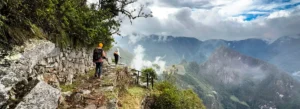
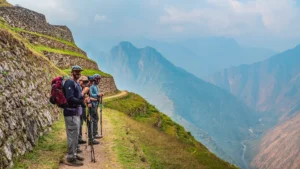
For those who walk the mountain trails, the presence of San Pedro serves as a reminder of the Andes’ profound cultural depth. It is a plant that has witnessed civilizations rise and fall, sacred routes carved into stone, and travelers searching for a deeper understanding of the spirit of these lands. Seeing it in its natural environment is encountering a living fragment of Andean history, a connection between past and present held within a single tall, silent stem rising through the mist of the cordillera.
What Is Wachuma or San Pedro?
Wachuma, also known as San Pedro, is a high-Andean cactus deeply connected to the ancestral spirituality of Peru. Its tall, columnar shape and outer green layer, where mescaline, its main alkaloid, is concentrated—have led it to be regarded as a master plant capable of fostering expanded perception, introspection, and a symbolic connection with nature. In Andean tradition, it is associated with the masculine spirit of the mountain, representing inner clarity, emotional strength, and balance.
Within Andean rituals, Wachuma is not seen as an ordinary drink but as part of a spiritual process guided by experienced practitioners. It plays a central role in ceremonies focused on emotional cleansing and deep reflection, practices passed down through generations. For travelers interested in Andean culture, Wachuma reveals another dimension of the landscape where nature and spirituality intertwine, reminding us that in the Andes, one does not only observe mountains: one also listens to the stories that continue to live within their traditions.
Importance in the Andean Worldview
The Andean worldview understands reality as a network of living relationships between human beings, nature, energies, and spiritual dimensions. Within this framework, wachuma or San Pedro is seen as a mediating plant, connected to introspection, reflection on one’s own heart, and the search for inner balance.
According to traditional narratives, this plant provides a pathway for observing the deeper aspects of existence and strengthening the cohesion between body, mind, and emotion. Its use is associated with exploring personal identity, valuing the natural world, and understanding internal dynamics linked to personal harmony.
History and Development of Ritual Use
The history of wachuma, or San Pedro, includes both ancestral accounts and events that emerged after the arrival of the conquistadors. One traditional story tells that those seeking material wealth were advised to drink the cactus infusion to withstand physical and emotional challenges. This experience is said to have transformed their perception of gold’s value, shifting their desire for riches toward a deeper sense of awareness and understanding.
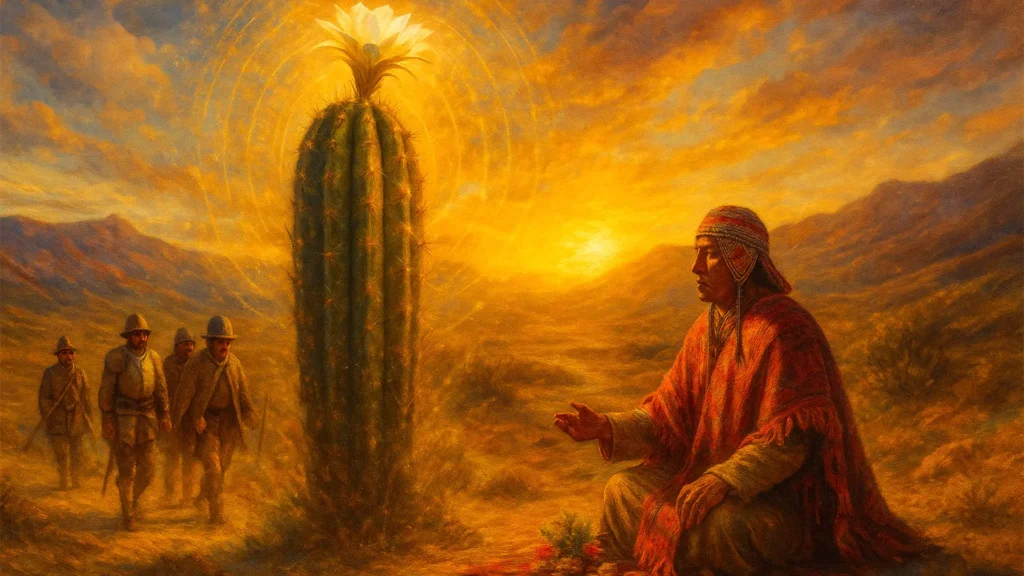
According to tradition, when the conquistadors crossed the Andean lands in search of gold, they found something very different from what they expected. As an old legend tells it, the local peoples warned them that no treasure would reveal itself unless they crossed the desert accompanied by the sacred cactus and under the guidance of a taita (Chaman) . Exhausted from their journey, they agreed to drink the infusion prepared with wachuma to withstand hunger and thirst.
What happened next transformed their view of the world. When they awoke, the greed that had driven them had given way to a profound curiosity. They no longer sought material wealth, but rather to understand the revelation they had experienced. It was then that they began calling the plant “San Pedro,” alluding to the symbolic idea of opening a “door” to another perception of reality.
Over time, this name became part of broader processes of cultural reinterpretation, where Christian elements were layered onto ancestral knowledge. Yet wachuma existed long before these external influences. For Andean traditions, it was, and continues to be a master plant: a voice carried by the wind, an inner medicine, and a bridge toward understanding one’s own heart.
The legend says that the true “gold” they found did not come from the earth, but from the consciousness awakened within them. For this reason, long before it was associated with any imposed saint, wachuma was recognized as a spiritual guide, a silent teacher that connects body, mind, and spirit, and remains a symbol of introspection and unity.
The Wachuma or San Pedro Ceremony
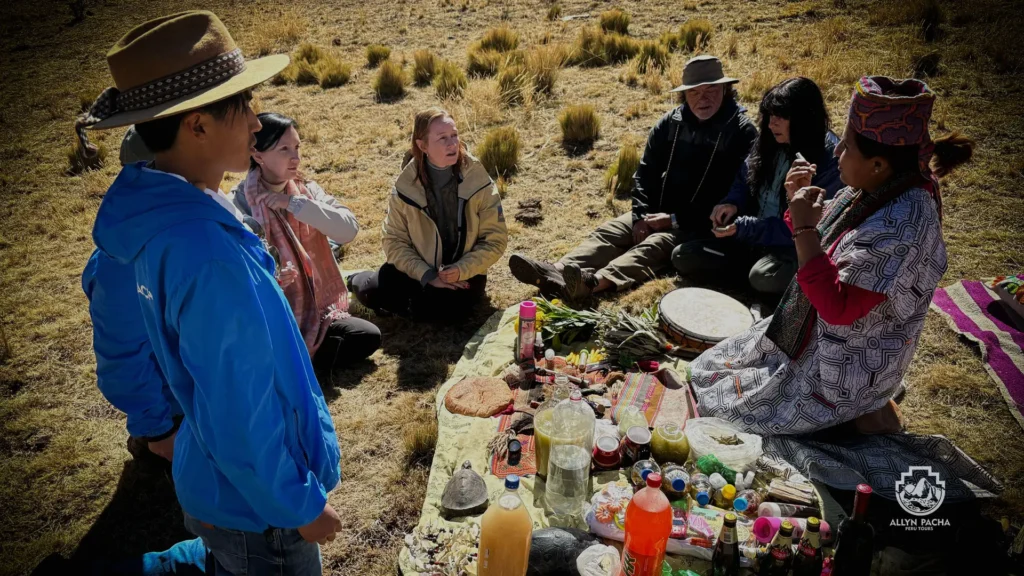
A Wachuma or San Pedro ceremony concludes as a deeply introspective process in which the participant moves through a ritual space designed to foster emotional clarity, inner observation, and a symbolic connection with the natural environment. The experience weaves together Andean cultural elements, psychological processes, and the physiological responses associated with the plant—always within a context guided by a trained practitioner whose role is to uphold the spiritual and cultural meaning of the ritual.
By the end of the ceremony, participants often feel a sense of emotional release, relief from internal tension, and a reflective state that allows them to reorganize personal aspects from a broader perspective. It is not considered a recreational activity but rather a ceremonial practice aimed at fostering balance, understanding, and inner well-being.
Physical, Emotional, and Spiritual Effects
The effects attributed to wachuma blend traditional empirical observations with contemporary perspectives. These experiences vary widely depending on the person, the context, and the amount used, and therefore cannot be generalized or presented as universally verifiable facts.
Physiological Effects
The documented effects include changes in sensory perception, variations in bodily rhythm, possible sensations of lightness, and heightened somatic sensitivity. Some traditional accounts describe physical purification processes that are symbolically interpreted as internal cleansing.
There are also suggestions of an influence on the cardiovascular system, although this point still requires further formal scientific research.
Spiritual Dimension
The spiritual dimension is one of the most meaningful components within this worldview. Traditionally, it is associated with heightened perception, the contemplation of nature, and the pursuit of inner coherence. From an anthropological perspective, this dimension is understood as a symbolic process that weaves together identity, cultural memory, and transcendent relationships.
Contemporary Scientific Evidence
Scientific literature has shown a growing interest in mescaline-containing cacti. Several studies have examined their neurochemical mechanisms, their effects on neurotransmitters, and their relationship with altered states of consciousness. While some preliminary research suggests potential contributions to emotional well-being, the findings remain inconclusive and require broader clinical studies.
Overall, current research indicates that entheogenic substances may influence brain circuits associated with perception, emotional regulation, and the integration of meaningful experiences. However, their use is not considered therapeutic on its own, and the available evidence is still limited.
Potential Well-Being Benefits of san pedro
Academic sources, ethnographic records, and personal testimonies describe several potential benefits, including:
- a subjective sense of mental clarity
- a feeling of emotional connection
- symbolic release of internal tension
- guided introspective exploration
- a sense of emotional balance after the experience
These effects vary depending on the context, the guidance received, and the emotional state of each person. For this reason, no specific outcomes can be guaranteed.
Preparation of San Pedro or Wachuma Medicine
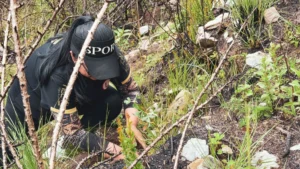
From an ethnographic perspective, the preparation of Wachuma or San Pedro is part of a complex ritual system within Andean curanderismo. It is not an isolated technical procedure, but rather a symbolic practice rooted in the local worldview. The selection of the cactus, an adult specimen with a green outer layer where mescaline is concentrated, is carried out according to principles of reciprocity and respect toward the plant, which is understood as a spiritual being.
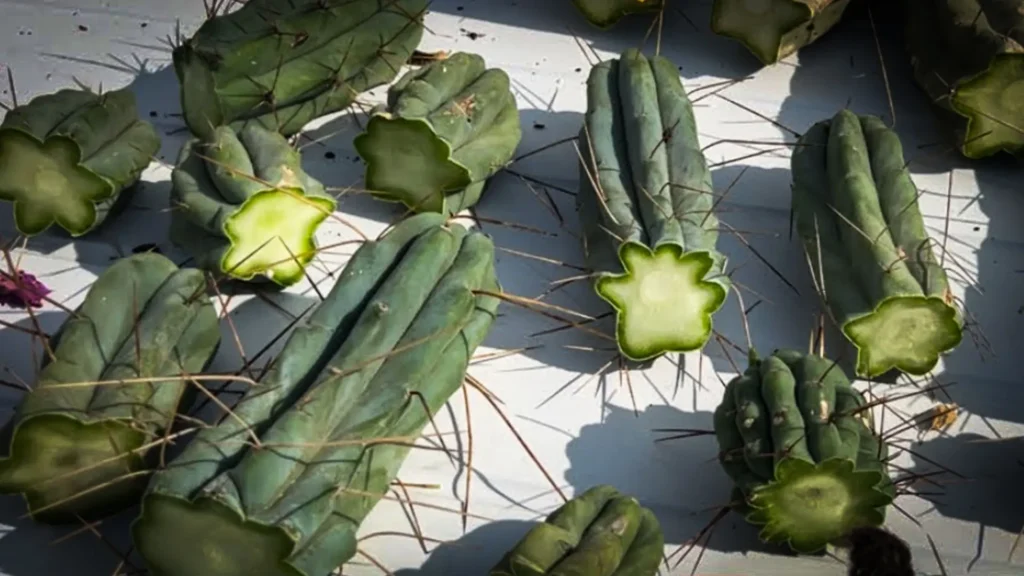
The plant material is then subjected to a prolonged process of transformation that may involve cooking or maceration, always carried out under the guidance of a ritual specialist. This guide not only oversees the preparation, but also shapes the cultural interpretation of the experience by integrating physiological effects, psychological introspection, and symbolic meaning. In this sense, the preparation of Wachuma is a ceremonial act that brings together traditional botanical knowledge, spiritual practices, and an Andean framework for restoring emotional and social balance.
Risks, Contraindications, and Precautions
The use of Wachuma involves risks and requires appropriate precautions. Contemporary analyses highlight several important considerations, including:
- Possible unpleasant physical reactions.
- Intensification of strong emotions.
- Contraindications for individuals with cardiovascular or psychiatric conditions, or those taking certain medications.
- Risk of misinterpretation without proper guidance.
A responsible approach is strongly recommended, avoiding individual use without professional support or without understanding the cultural and ceremonial context.
Legal Situation in Peru
In Peru, the San Pedro cactus, also known as Wachuma, is officially recognized by the Ministry of Culture as part of the Nation’s Cultural Heritage only in its traditional use within northern Peruvian curanderismo. The resolution declares as cultural heritage the knowledge, practices, and ritual uses of San Pedro in healing traditions, always under the guidance of an experienced curandero and within contexts of diagnosis, healing, and spiritual balance.
The document explicitly differentiates this traditional use from any form of drug misuse, recreational consumption, or “mystical tourism,” stating that such practices are outside its cultural context and therefore not included in what is protected. In other words:
This recognition does not authorize or legitimize recreational use, nor does it modify the general legal framework that regulates controlled substances; it is limited exclusively to cultural and heritage protection.
The State acknowledges and protects the ritual and community-based use of San Pedro or Wachuma within traditional curanderismo.
Academic Recommendations for a Responsible Approach
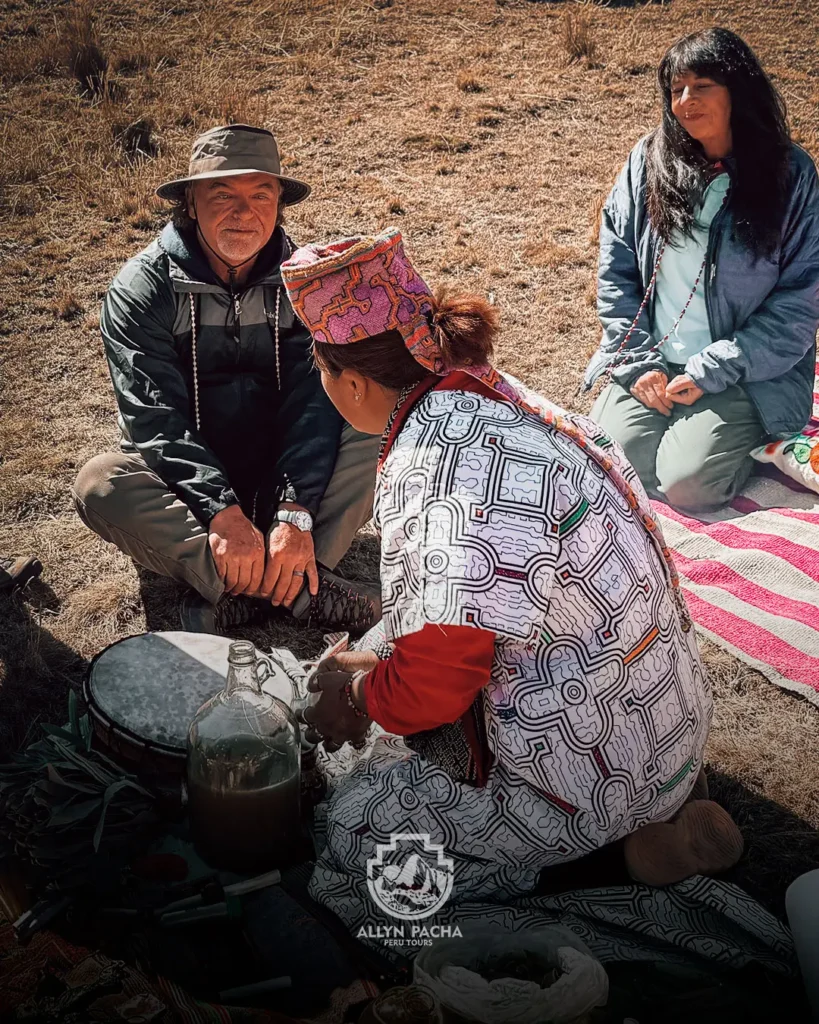
A responsible approach should take into account:
- An academic, critical, and non-idealized perspective.
- Respect for its cultural and symbolic significance.
- Awareness of potential physiological and psychological risks.
- The need for guidance from trained practitioners (shamans).
- Avoiding recreational or decontextualized use.
- Prior study of the applicable legal framework.
These guidelines support a more coherent and balanced understanding, helping prevent simplistic interpretations or unsafe approaches.ado, evitando interpretaciones simplistas o aproximaciones imprudentes.
Conclusion
Wachuma, or San Pedro, is a master plant of profound historical, emotional, and symbolic significance. Its study brings together anthropological, physiological, and spiritual perspectives, allowing us to understand it beyond its chemical composition. Although it can generate meaningful experiences for many people, its use requires responsibility, competent guidance, and a clear understanding of its risks and cultural complexity.
From an academic standpoint, wachuma invites reflection on the relationship between perception, identity, and spirituality, and it remains a key subject of study in contemporary Andean ethnobotany and anthropology.
Wachuma or San Pedro contains psychoactive substances. Its use involves physical and emotional risks. Any practice must be carried out only under the guidance of trained professionals and in strict compliance with current legislation.
We invite you to join this tour and explore wachuma from an integral perspective that blends culture, history, and safe learning. Reserve your spot and expand your understanding through the Wachuma Ceremony.
Frequently Asked Questions
1. What is Wachuma or San Pedro?
It is a cactus traditionally used in Andean ritual contexts and contains mescaline, an entheogenic alkaloid.
2. What are the effects of Wachuma?
They may include perceptual changes, introspection, and emotional shifts, depending on the context and the individual.
3. Is Wachuma considered an Andean medicine?
Within the cultural framework, it is regarded as a “master plant.” From a scientific standpoint, its effects still require further research.
4. Is a Wachuma ceremony safe?
Any such practice involves risks. A trained guide is essential, and it should never be used without proper supervision.
5. Is Wachuma legal in Peru?
Its traditional use has recognized cultural significance, but mescaline is a regulated substance. It is important to be informed before participating in any practice.
6. Does Wachuma have therapeutic benefits?
Preliminary studies suggest potential benefits, but they do not constitute conclusive therapeutic evidence.
7. Why is Wachuma called San Pedro?
It is called San Pedro because, according to tradition, the conquistadors who drank its brew experienced an opening of consciousness they interpreted as the plant “opening a door” within. They associated this symbolic revelation with the Christian figure who holds the keys to heaven. Over time, the name became part of a cultural reinterpretation that sought to frame Andean sacred traditions within European references.
8. What is the difference between Wachuma (San Pedro) and Ayahuasca?
The difference between Wachuma, also known as San Pedro, and Ayahuasca lies mainly in their cultural origins, the way they are used in traditional ritual contexts, and the type of symbolic experience they represent within their respective regions.
Wachuma, associated with the Andes, is a cactus used in Andean healing ceremonies with an emphasis on introspection and connection to the natural environment. In the traditions where it is practiced, it is often linked to inner reflection, emotional clarity, and a heightened perception of the surrounding landscape and world. Culturally, it forms part of practices that seek balance and personal understanding within the Andean worldview.
Ayahuasca, on the other hand, belongs to Amazonian traditions. In these contexts, it is considered a visionary plant that facilitates symbolic exploration of one’s inner life, memory, and deep aspects of identity. In many Indigenous communities, its use is accompanied by ritual chants and a specific spiritual framework that guides the experience.
Although each plant fulfills a distinct cultural role, they share a common purpose within their traditions: to support processes of introspection, personal learning, and the search for balance — always under the guidance of traditional specialists who safeguard the cultural heritage of their communities.