


Table of Contents
Orchids, considered one of the oldest and most diverse flower families on the planet, include between 25,000 and 30,000 species found in nearly every corner of the world. With a history spanning 60 to 80 million years, they have adapted to environments as varied as tropical rainforests, cloud-covered mountains, and Andean woodlands, displaying shapes, colors, and fragrances that seem crafted to inspire wonder.
Their ancient evolution explains why these flowers continue to captivate travelers, photographers, and nature enthusiasts. And it is precisely this long evolutionary journey that allows orchids to become true highlights of the landscape today in extraordinary places like Machu Picchu and the Inca Trail.
The Ancient History of Orchids and Their Connection to Machu Picchu

A Journey Through Orchids and Ancestral Trails
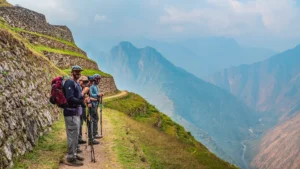
The Historic Sanctuary of Machu Picchu and the Inca Trail, spanning more than 37,312 hectares of biodiversity, form one of Peru’s most fascinating ecological corridors. Walking these ancestral paths means immersing yourself in a world where the cloud forest gently envelops the mountains with constant, soft humidity, an ideal setting for the orchids of Machu Picchu to reveal their full beauty. More than 400 species have been recorded along these Andean slopes, from tiny blossoms hidden among the moss to large, sculptural flowers hanging from tree branches.
As you make your way along the Inca Trail, each step brings a new surprise: intense colors, unexpected shapes, and adaptations that speak of thousands of years of evolution. Some orchids are so small they seem like secrets of the forest, visible only to those who take the time to observe; others cluster in vibrant bouquets that light up the path like little lanterns of life. This explosion of diversity is possible thanks to the presence of multiple microclimates, created by the region’s steep geography and shifting altitudes, factors that make Machu Picchu a truly unique sanctuary for nature lovers.
The Biodiversity of the Historic Sanctuary of Machu Picchu
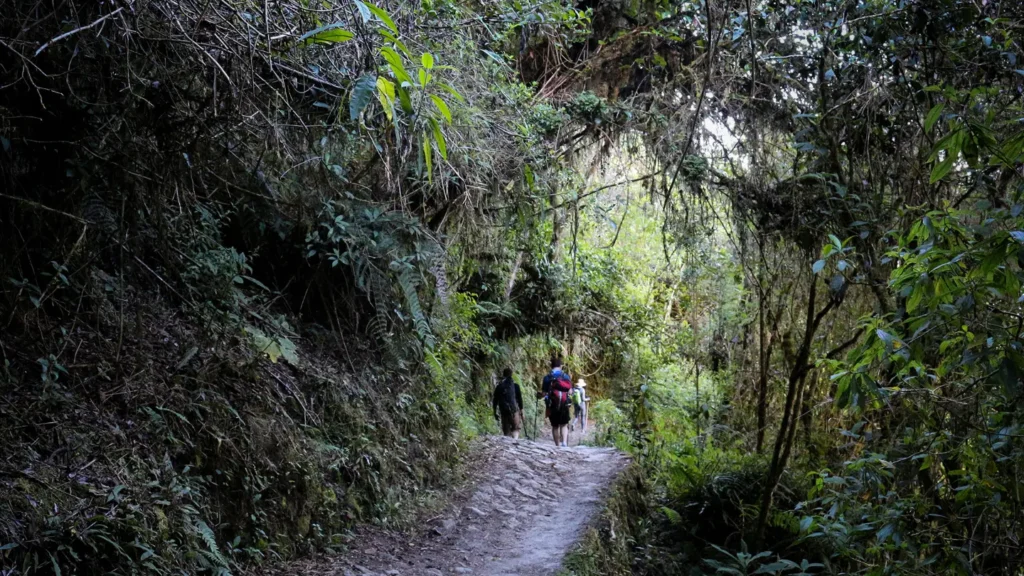
A unique ecosystem where more than 400 orchids flourish in Machu Picchu
The Andean cloud forest of Machu Picchu is a living, humid, and ever-changing world, where mist embraces the mountains and every breeze carries the scent of the high jungle. In this environment, shaped by seasonal rains and an altitudinal gradient that ranges from temperate zones to cool, humid slopes, the orchids of Machu Picchu find the perfect setting to thrive.
Here, epiphytic species grow suspended on trunks and branches without harming them, absorbing water and nutrients directly from the air. It is a silent yet captivating spectacle: flowers that seem to emerge from the air itself, supported only by the moisture of the cloud forest.
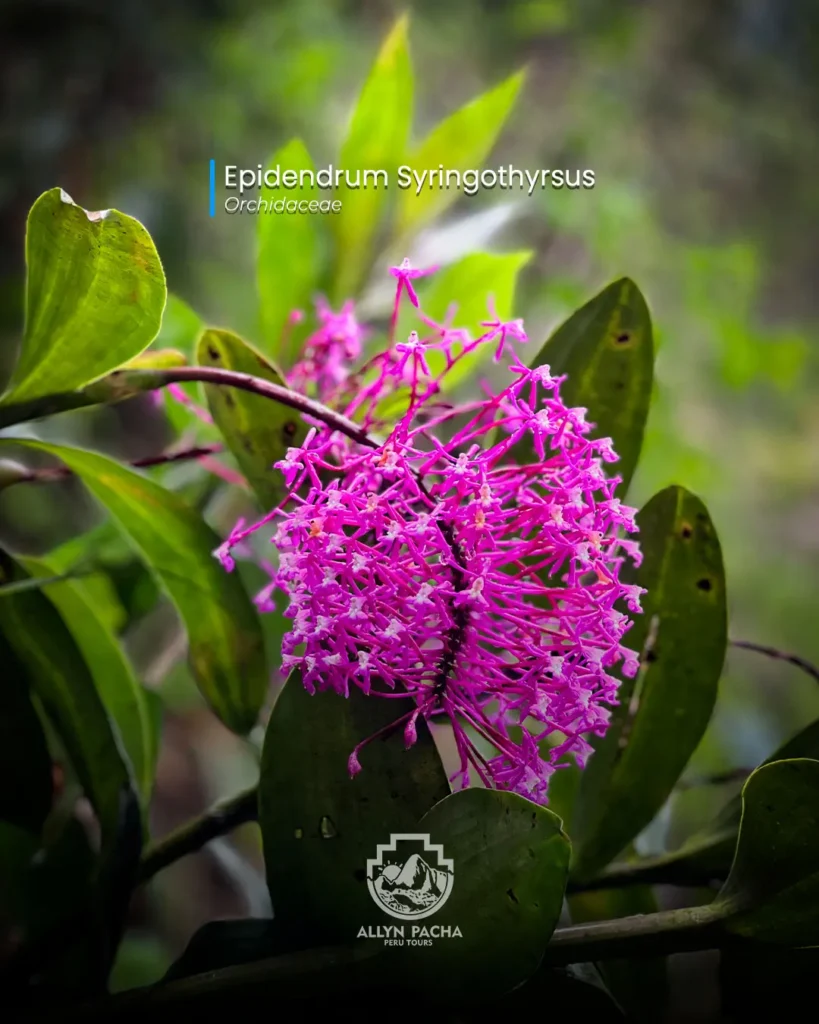
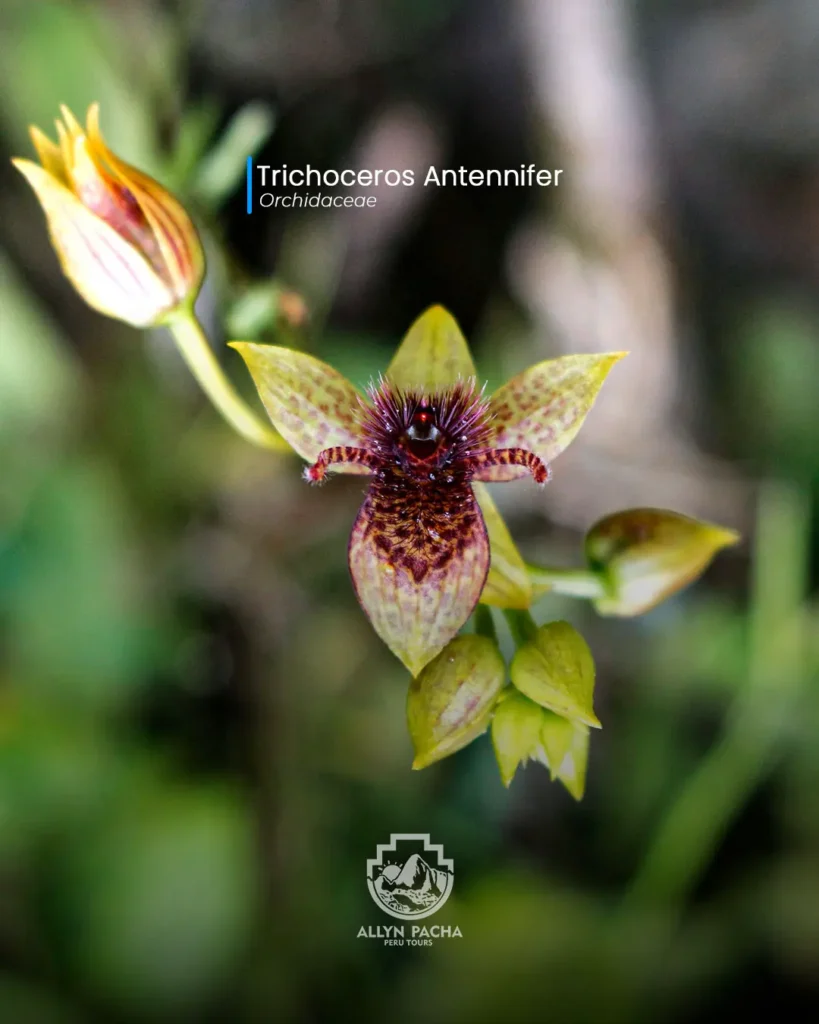
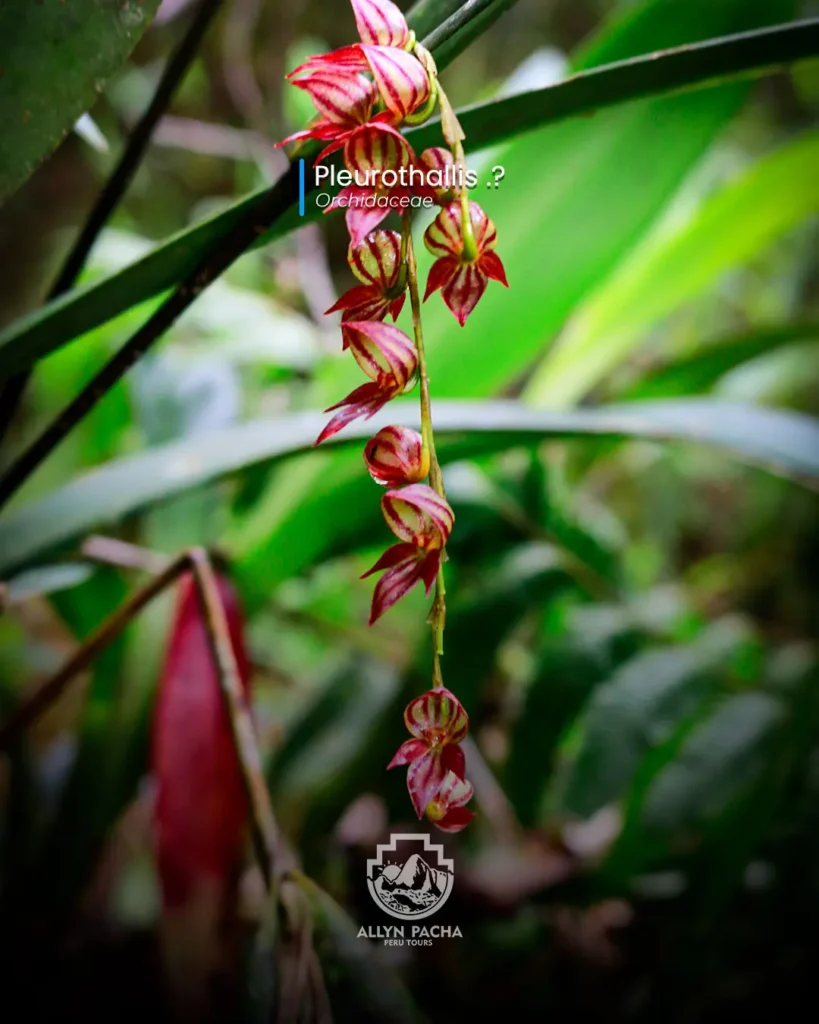
Along the Inca Trail, the prevailing colors form a natural palette that enchants every traveler: vibrant pinks, deep purples, bright oranges, warm yellows, and almost ethereal whites. Each orchid reveals a unique shape, and some even mimic insects or birds, an evolutionary strategy that helps attract their pollinators. For those who walk these trails, finding them feels like listening to nature tell an ancient, delicate, and vibrant story.
Why Machu Picchu Is a Hotspot of Endemic Flora
The steep ravine topography, constant cloud formation, and transition between ecological zones have created unique niches where species found nowhere else can thrive. Many orchids in the sanctuary do not exist in any other part of the world, adding to the scientific importance of the area.
Orchid Garden on the Inca Trail
Epiphytic Orchids: Adaptation and Complexity in High-Andean Flora
The orchids along the Inca Trail are one of the silent wonders that accompany travelers through the mist and cloud forests. Adapted to Andean humidity and the filtered light beneath the forest canopy, they display elegant shapes and aerial roots that reveal millions of years of evolution.
Along the route, from 500 up to nearly 3,800 meters above sea level, these orchids find their home. This is why the Inca Trail to Machu Picchu is a true natural laboratory, where every stretch surprises visitors with new colors and species.
Some bloom year-round, others only during the rainy season, and many are endemic—found exclusively in these mountains. Seeing them in their natural environment is more than admiring flowers: it is connecting with the ancestral rhythm of the Andes and discovering the wild beauty that makes the Inca Trail an incomparable experience.
Iconic Species of the Inca Trail
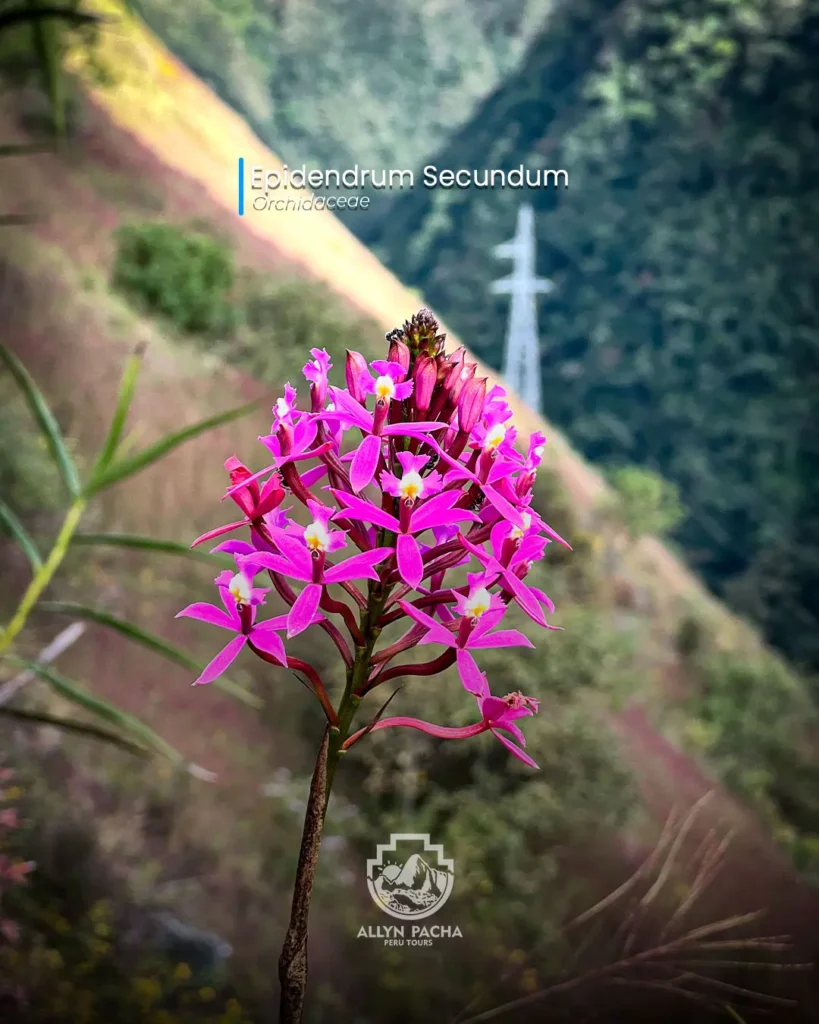
Wiñay Wayna (Epidendrum secundum)
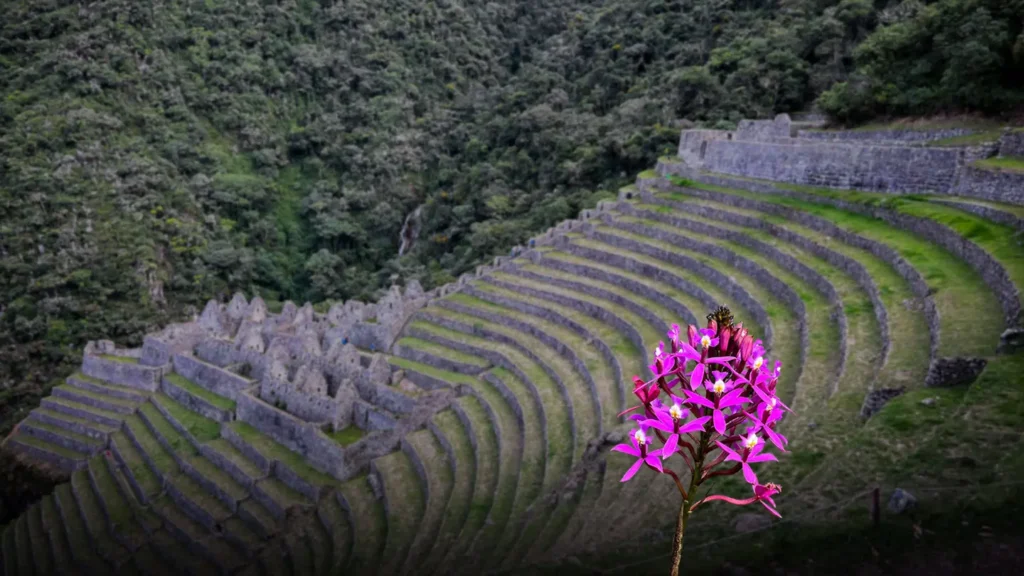
Wiñay Wayna is the orchid the Incas called “forever young” because of its nearly continuous blooming. It is so abundant and vibrant that it gave its name to one of the most beautiful archaeological sites on the Inca Trail. Peruvian archaeologist Julio C. Tello chose this name in honor of its intense purple tones, which stand out amid the moist vegetation of the cloud forest.
Scientifically known as Epidendrum secundum, it is common in the sanctuary, yet its delicacy makes it special. Its small iridescent flowers, ranging from white to fuchsia, seem to catch and reflect the light with every step, creating an effect that feels almost suspended in the air.
Wakanki (Masdevallia veitchiana)
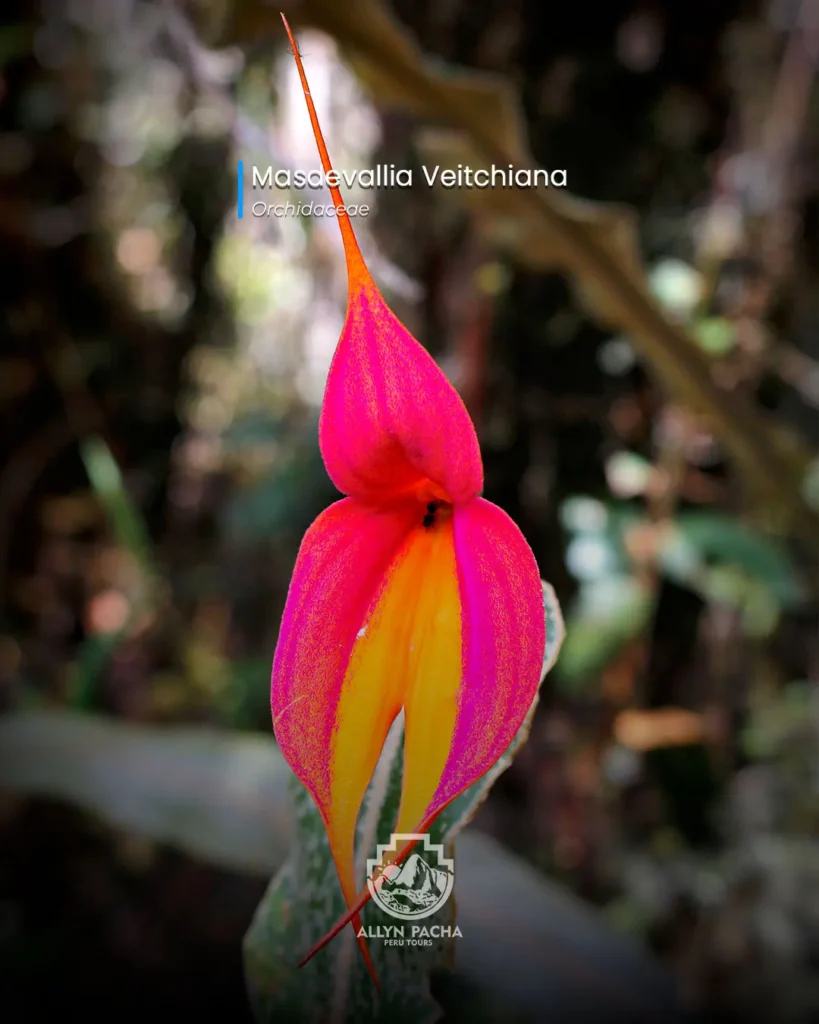
One of the most beautiful and iconic orchids of the Inca Trail. According to an Inca legend, it was born from the tears of a princess in love, and its name“you will cry”still echoes that story. Its vibrant colors, ranging from red to purple, shift with the light of the cloud forest and sometimes blend into a single flower.
The Waqanki is a true jewel of Andean flora and one of the most sought-after treasures for travelers along the Inca Trail. Its best blooming season runs from November to April, especially near Wiñay Wayna and the main entrance to Machu Picchu, where it appears quietly among the vegetation, ready to surprise those who find it.
Telipogon Popilio
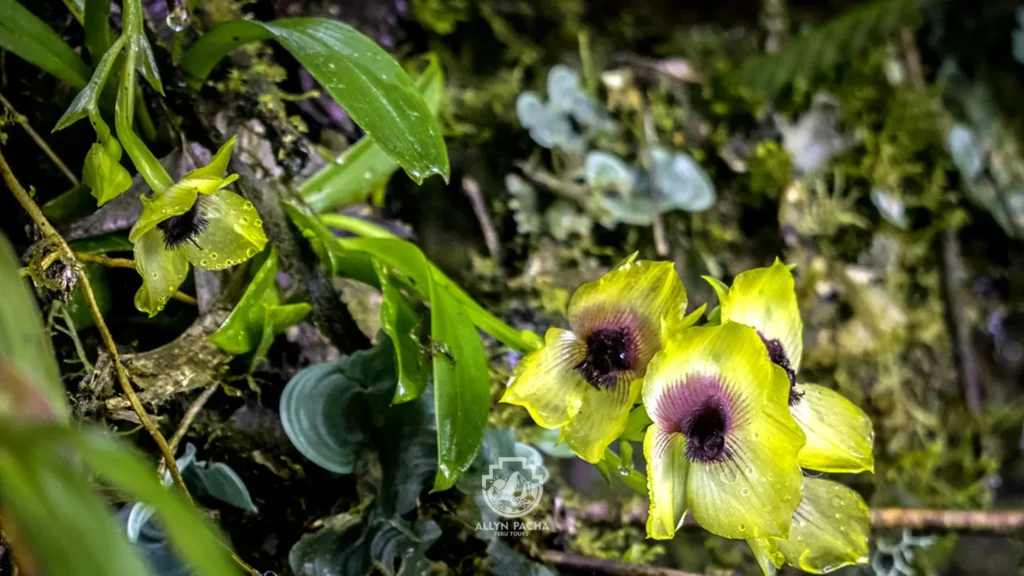
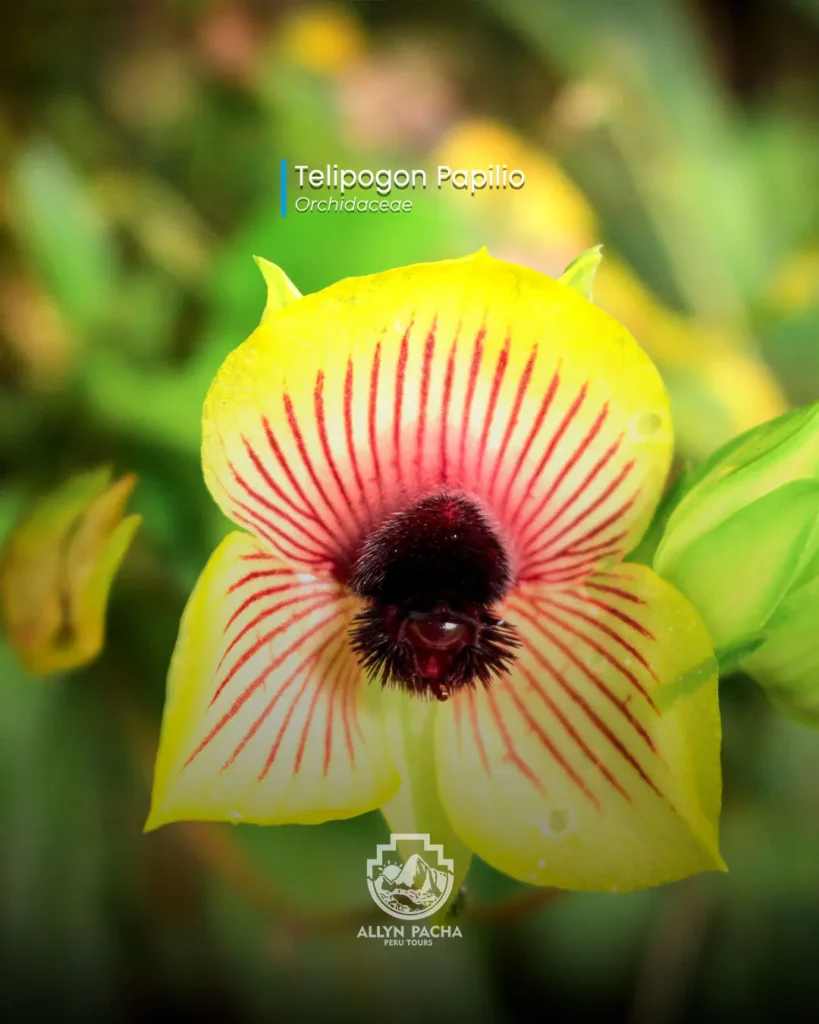
In the shadiest areas of the Andean cloud forest grows an epiphytic orchid that lives exclusively on the high branches of trees, where moisture remains constant. It has a short stem, oval leaves, and a flower about four centimeters wide that blooms between March and June. Its structure features yellowish-green sepals and petals that range from pale yellow to more intense tones toward the edges, crossed by reddish-purple veins that radiate from the center. The column, with brownish-purple hues, adds a distinctive contrast. This is an uncommon species, observable only with patience and careful attention, and it represents one of the most discreet yet remarkable elements of the flora along the Inca Trail and in the forests surrounding Machu Picchu.
Sobralia Dichotoma
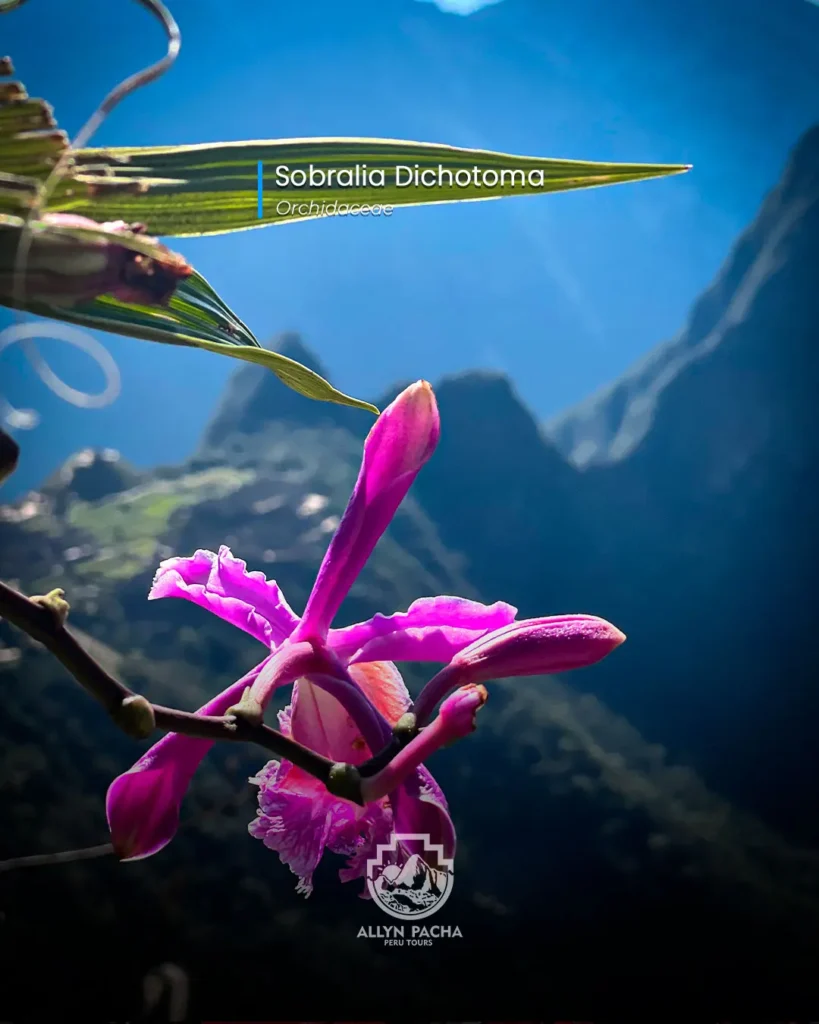
Also known as the bamboo orchid because its stems resemble those of bamboo. This orchid is very common in the Sanctuary and is easily recognized by its long, cane-like stems that can reach up to 6 meters in height. Its large, showy flowers display a bright reddish-purple color. The tip of the labellum is an intense magenta, while the center is yellow. It can be found along the trails surrounding the citadel of Machu Picchu. It blooms sporadically throughout the year.
Phragmipedium caudatum
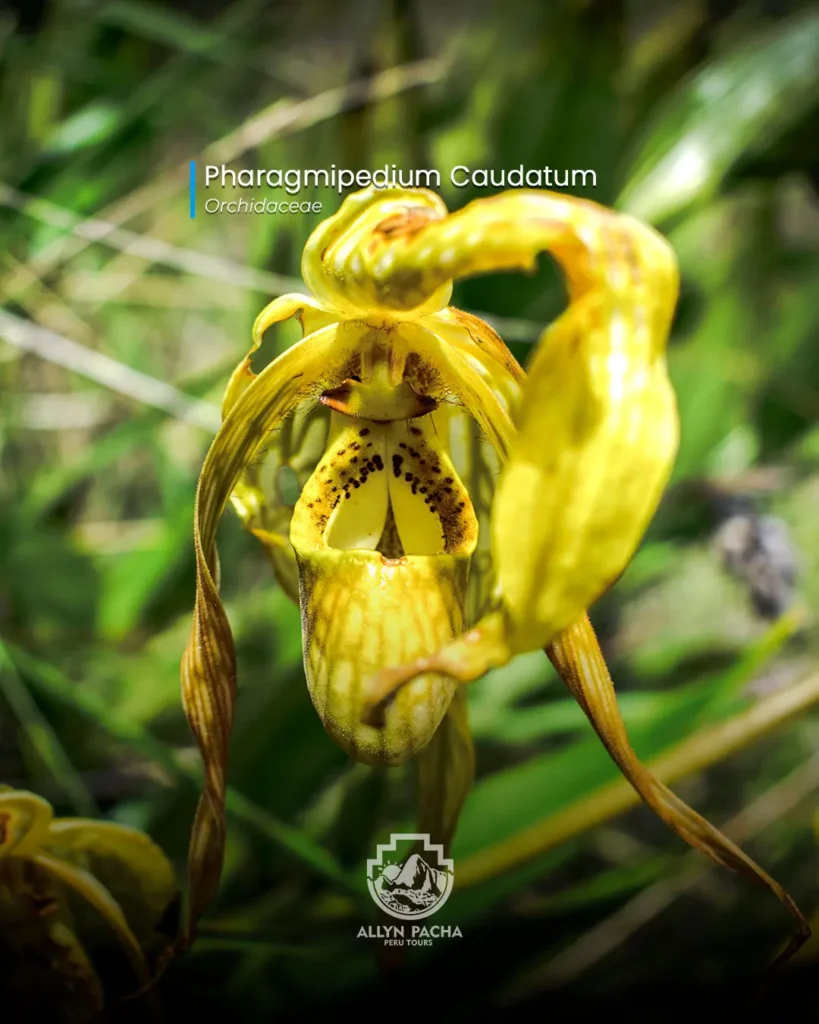
This orchid, known for its globular, slipper-shaped lip, stands out as one of the largest species found around Machu Picchu. It can grow either terrestrially or as an epiphyte and features exceptionally long petals, ranging from 20 to 80 centimeters. Their coloration varies from creamy white to green and greenish-brown, sometimes with purplish-brown tones.
It has been recorded in the lower forests near the Inca citadel and along the Short Inca Trail, especially midway up toward Wiñay Wayna, where it can be seen attached to branches or emerging from moist soil. It blooms from March to May, a period when the soft light of the cloud forest highlights its distinctive morphology.
Ideal Season to Observe Orchids in Machu Picchu and the Inca Trail
November to April: The Splendor of the Cloud Forest
During the rainy season, the forest reaches its peak vitality. Humidity rises, the leaves become more vibrant, and many orchid species begin to bloom, offering a richer and more captivating visual experience.

What to Expect on the Trek Depending on the Season
During the dry season (May to October), visibility improves and the landscape becomes clearer, although blooming decreases. In the wet season, flowers are more abundant, but the trails require extra caution due to the damp terrain.
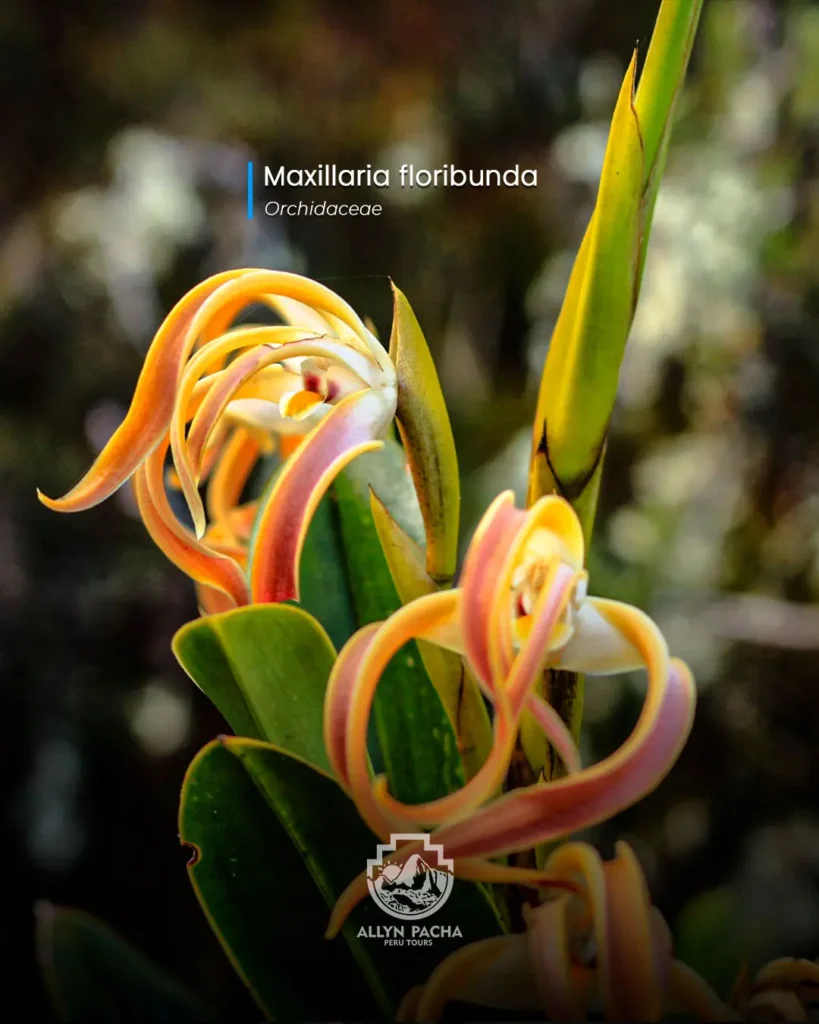
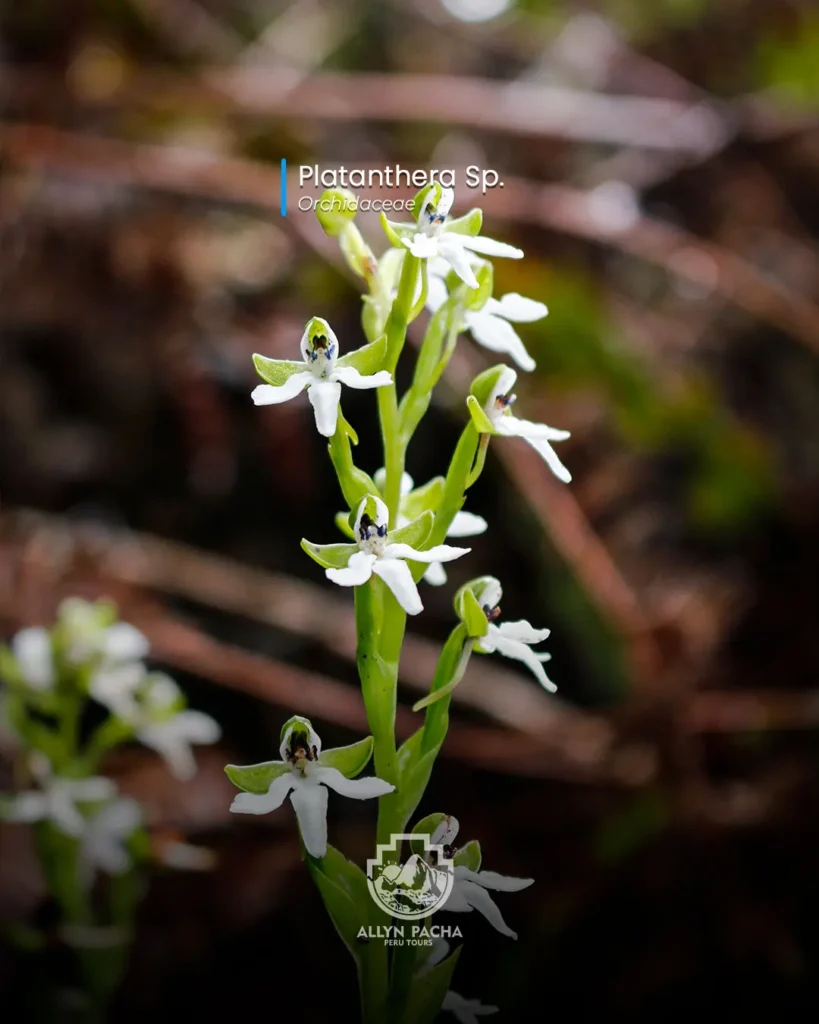
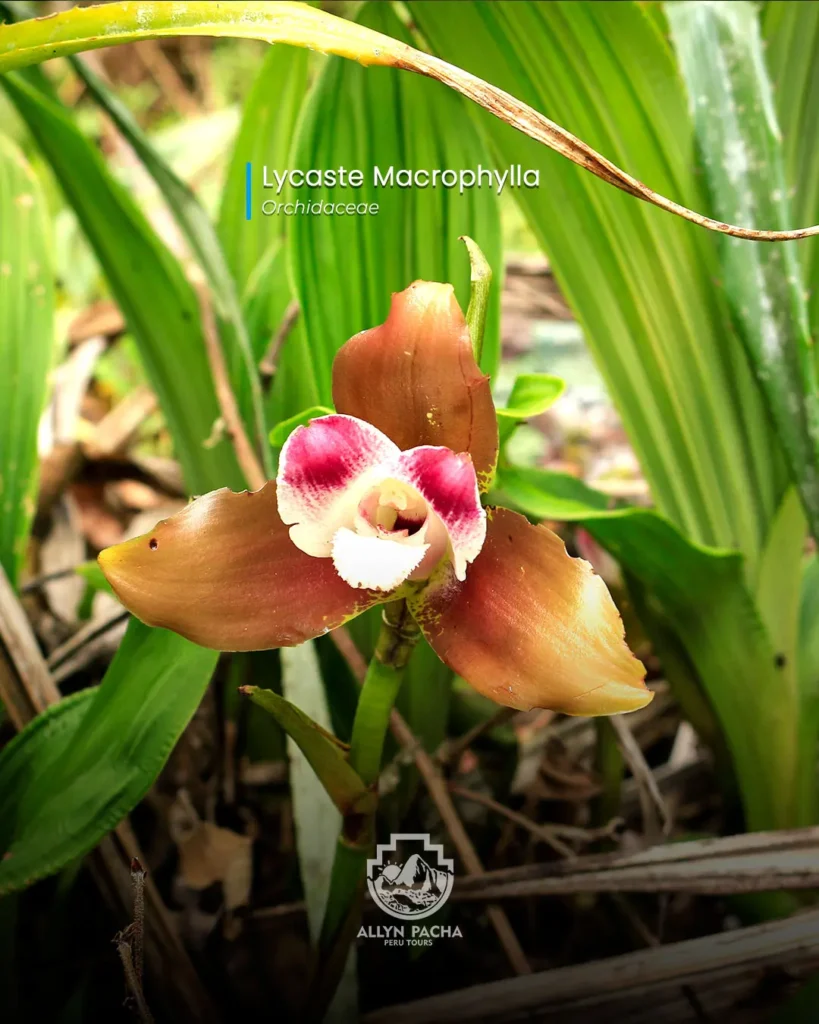
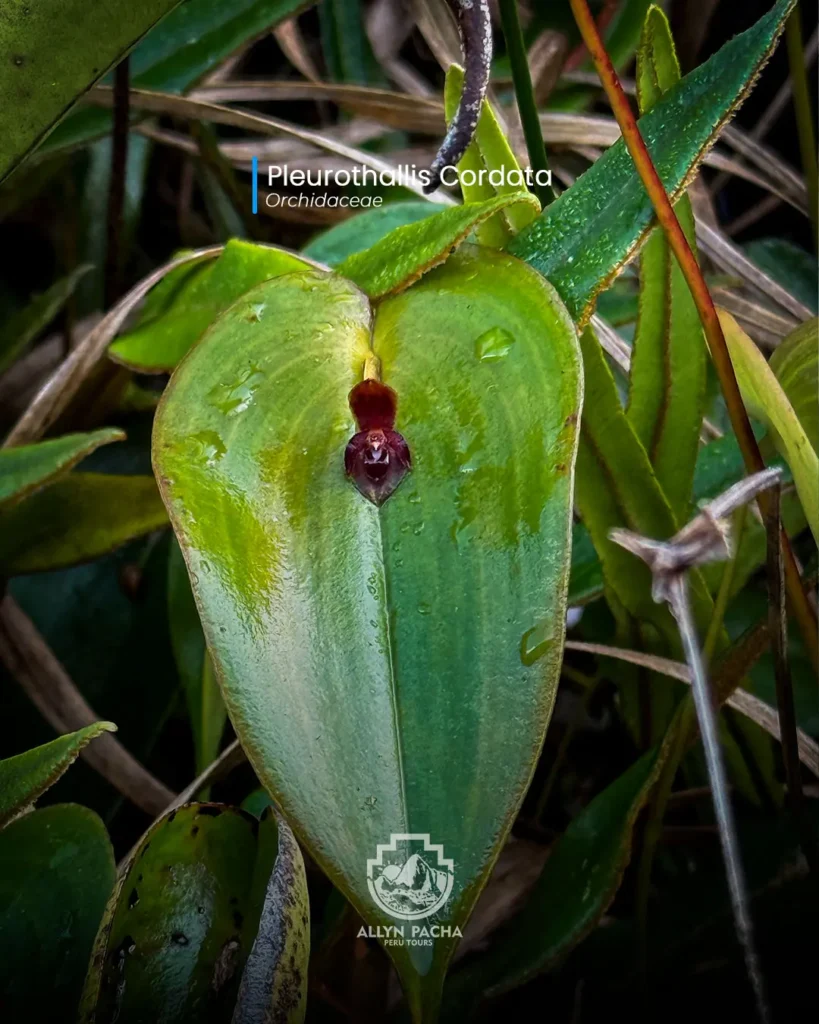
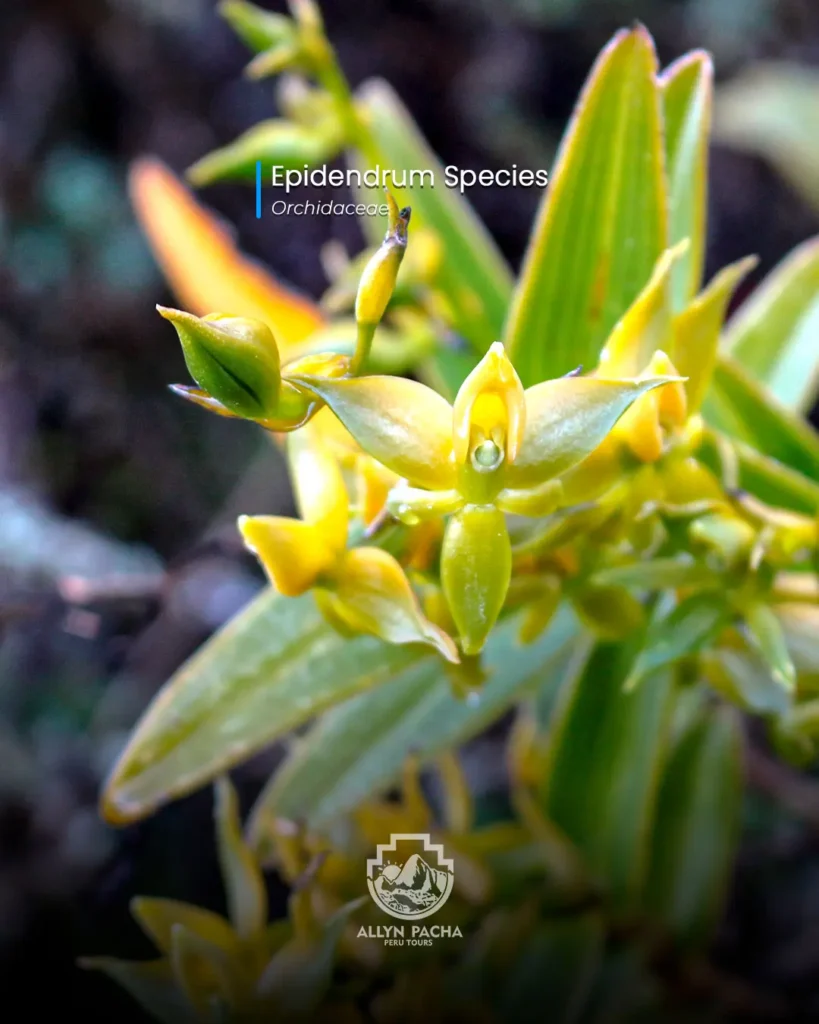
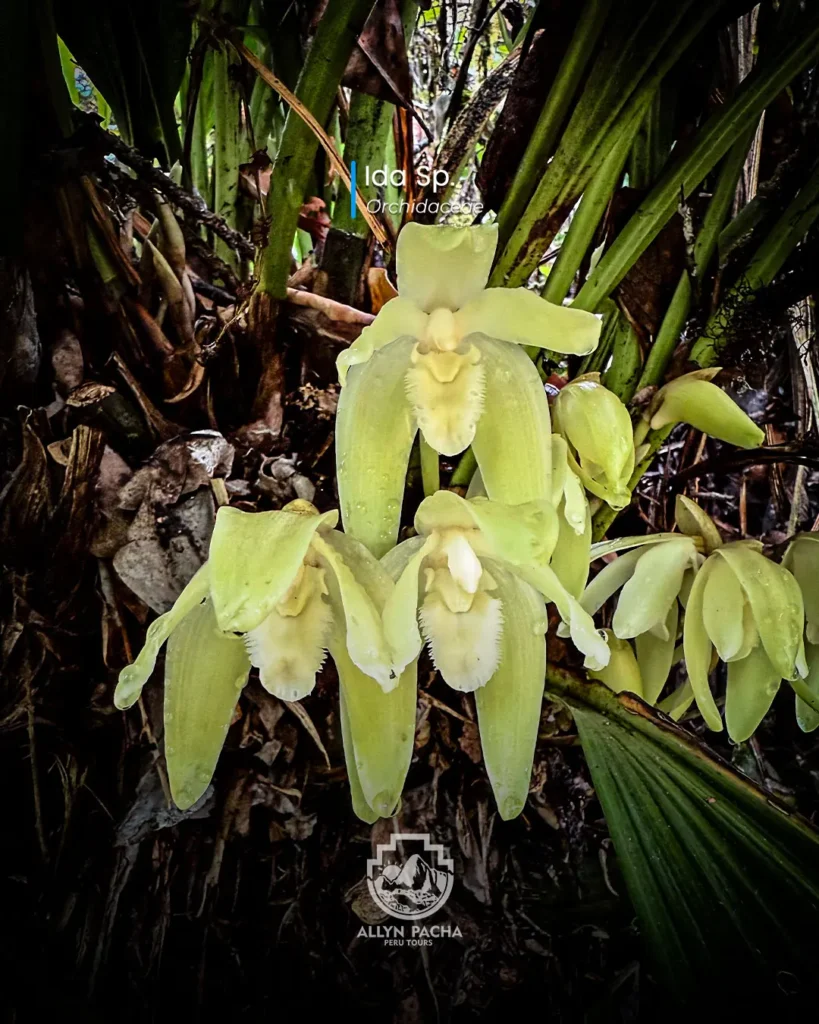
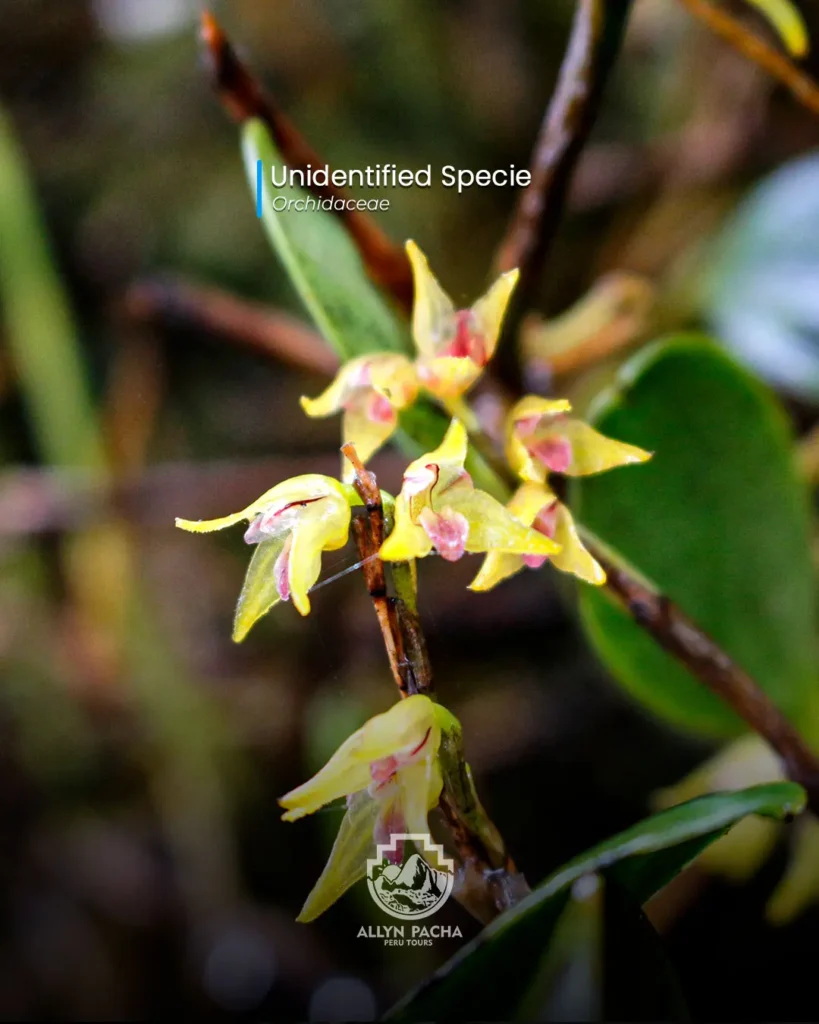

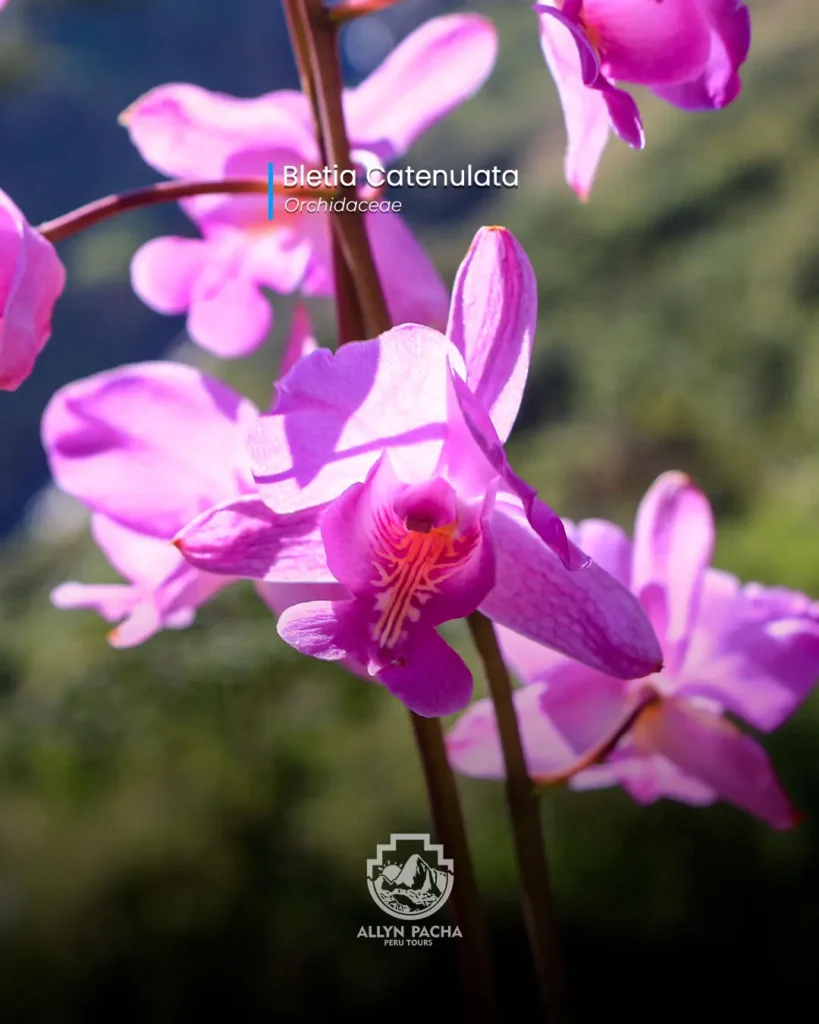
Cultural and Scientific Importance of Orchids in the Peruvian Andes
Pre-Inca and Inca Heritage: Quechua Names and Symbolism
Orchids are not only admired for their beauty; they are also part of Andean cultural heritage. Species such as Wiñay Wayna and Wakanki carry Quechua names passed down through generations.
Recent Studies and Discoveries in the Historic Sanctuary
Machu Picchu continues to prove that its richness goes far beyond archaeology. In recent years, the sanctuary has added three new orchid species to its remarkable biodiversity, officially recorded in international scientific studies. These newly identified varieties, Epidendrum ochoae, Epidendrum incahuamanii, and Epidendrum mormontoy, bear names that honor individuals who have devoted their lives to protecting the landscape: a biologist responsible for the area’s biocultural management and two guardians in charge of conserving the llaqta and the Inca trails.
Beyond the botanical discovery, these findings confirm what many travelers sense while trekking the Inca Trail: Machu Picchu is a living ecosystem where mist, stone, and vegetation coexist in balance, still sheltering species yet to be discovered.
Brassia
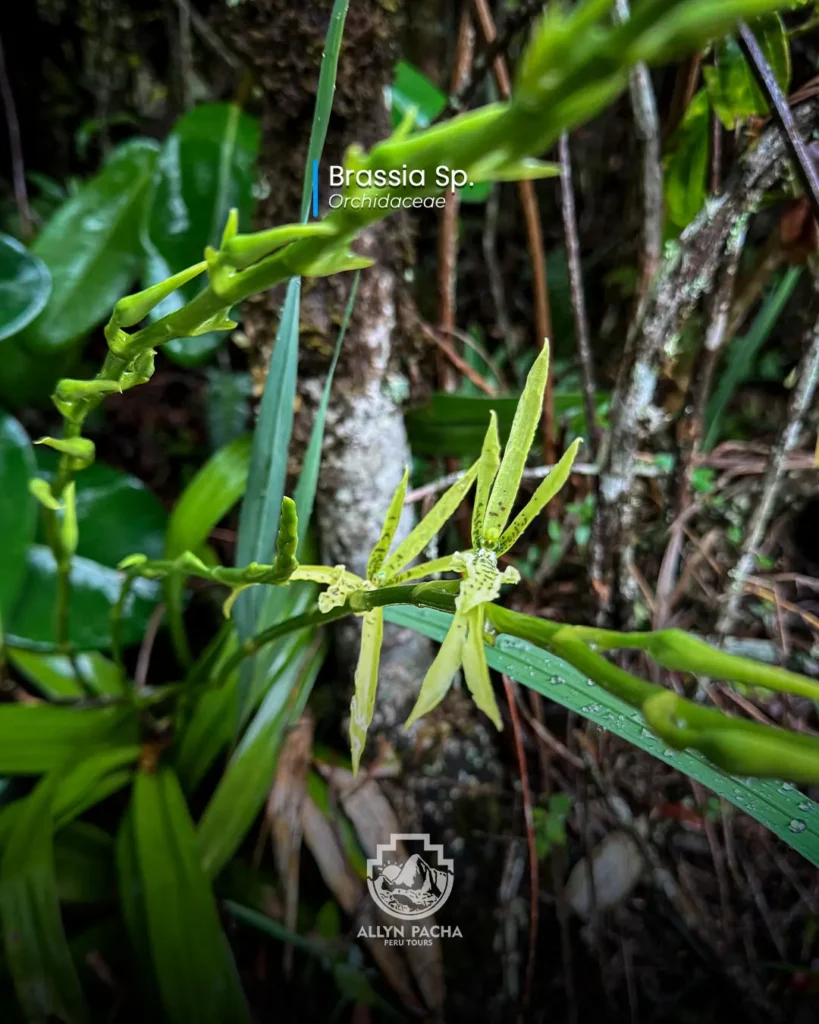
I found this orchid at the beginning of the Short Inca Trail, in the archaeological site of Chachabamba, at about 2,170 meters above sea level. It was a completely unexpected discovery—a species I had never seen before. Its presence, its form, and the elegance of its petals stopped me in my tracks. I immediately suspected it belonged to the Brassia group, but after doing some research, I couldn’t determine its exact identification.
I came across it on November 23rd, shining amid the damp vegetation as if it had been waiting to be found. For those of us who love orchids, moments like this are a gift: that instant when you encounter an unknown flower and feel a mix of curiosity, excitement, and wonder.
I would be very grateful if anyone recognizes this species or has more information about it. Any contribution will be valuable in continuing to learn about the extraordinary diversity that blooms along the Inca Trail and in the forests surrounding Machu Picchu.